


PANEL 1
On the 5G research, innovation and collaboration frameworks looking at a global agreement:
A global perspective of the business priorities, opportunities, fundamental challenges, key enabling technologies and instruments for making the Advanced 5G Infrastructure a reality with the maximal level of stakeholders’ consensus.
- Tuesday, 24 June 2014, 14:45-16:15, Room Europa
Motivation and Background:
Several initiatives on 5G are currently ongoing globally, namely: 5GPPP in Europe, 863 in China, 5G IC in the UK, Korea, Japan, etc. This panel aims at addressing the fundamental business aspects and benefits for a global adoption and market uptake of 5G technologies, thus enabling a sustainable business ecosystem in the future. The speakers from different regions will present their views on the business viability of 5G Networks and Services, opportunities offered by international collaboration between ongoing research and innovation frameworks, what needs to be necessarily regulated, standardized, and provide answers to some of the following fundamental questions. Beyond this, the distinguished speakers will address the main obstacles and barriers to meet current and future wide range of requirements, such as: "Verticals" needs; true ubiquitous "ABC" access; restless pressure on bandwidth; spectrum crunch; complex traffic – usage patterns; cloud computing reshaping the networks; complex/common management; security; energy consumption, etc. Last, but not least, the panellists will share their views on the new technology enablers of the advance 5G infrastructure, beyond the scope of current standardization working items, to support the following requirements, but not limited to: 1) D2X and M2X communications; 2) 1000 times wireless area capacity with wider varied service capabilities; 3) Saving up to 90% of energy per service provided; 4) Reducing service creation time from 90 h to 90 min on average; 5) Very dense deployments; 6) Secure, reliable and dependable Internet with a “zero perceived” downtime for services provision.
Questions:
- What are the new market opportunities and business models of 5G?
- How to ensure coordinated regulatory and standardization activities globally?
- What would be the competitive industrial offers for 5G systems and technologies?
- What are the new economically-viable services of high societal value (e.g. U-HDTV and M2M applications)?
- How to cope with the fundamental technical challenges and what are the corresponding key enabling technologies?
Participants
The panel is composed of (see CVs below):
- Chair (organizer and moderator): Dr David Soldani (VP and Head of Central Research Institute European Research Centre, Huawei, Germany)
- 5G IC UK: Rahim Tafazolli (5G IC Director, University of Surrey, UK)
- 5G Infrastructure Association: Werner Mohr (Chair of the 5G IA, NSN, Germany)
- 5G Japan: Takaharu Nakamura (Sub-Leader of ARIB 2020 and Beyond AdHoc, Fujitsu, Japan).
- 5G Korea: Heyon Woo Lee, (Chair of a subcommittee, 5G Forum, Korea).
|
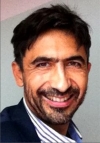
DAVID SOLDANI is one of the top and distinguished experts in multi-disciplinary, long-term, transformative frontier research. He has been active in ICT field for >20 years, successfully working on 150+ R&D projects for 2-5G, and generating original contribution to any type of quality deliverable. Dr. Soldani is currently VP of the Huawei ERC and Head of Central Research Institute (CRI) in EU. Areas of his responsibility include, but not limited to: Future Wireless, Network and Multimedia Technologies. He represents Huawei Technologies in the 5G Infrastructure Association and in the Steering Board (SB) of Net!Works/ISI European Technology Platform (ETP).
|
 |
| Rahim Tafazolli is the Director of the Centre for Communications Systems Research (CCSR) and 5G Innovation Centre (5GIC), The University of Surrey in the UK. He has published more than 500 research papers in refereed journals, international conferences and as invited speaker. He is the editor of two books on “Technologies for Wireless Future” published by Wiley’s Vol.1 in 2004 and Vol.2 2006. He is currently chairman of EU Net!Works Technology Platform Expert Group, board member of the UK Future Internet Strategy Group (UK-FISG). He was appointed as Fellow of WWRF (Wireless World Research Forum) in April 2011, in recognition of his personal contribution to the wireless world. As well as heading one of Europe’s leading research groups. | 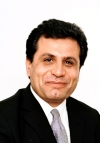 |
|
|
|
| Werner Mohr was graduated from the University of Hannover, Germany, with the Master Degree in electrical engineering in 1981 and with the Ph.D. degree in 1987. Dr. Werner Mohr joined Siemens AG, Mobile Network Division in Munich, Germany in 1991. He was involved in several EU funded projects and ETSI standardization groups on UMTS and systems beyond 3G. Since December 1996 he was project manager of the European ACTS FRAMES Project until the project finished in August 1999. This project developed the basic concepts of the UMTS radio interface. Since April 2007 he was with Nokia Siemens Networks GmbH & Co. KG and since May 2012 with Nokia Siemens Networks Management International GmbH in Munich Germany, where he is Head of Research Alliances. He was the coordinator of the WINNER Project in Framework Program 6 of the European Commission, chairman of WWI (Wireless World Initiative) and of the Eureka Celtic project WINNER+. The WINNER projects laid the foundation for the radio interface for IMT-Advanced and provided the starting point for the 3GPP LTE standardization. In Framework Program 7 he is coordinator of the FINSENY project as part of the Future Internet Public Private Partnership (FI-PPP). In addition, he was vice chair of the eMobility European Technology Platform in the period 2008 – 2009 and he is now Net!Works (formerly called eMobility) chairperson for the periods 2010 – 2011 and 2012 – 2013. Werner Mohr was chair of the "Wireless World Research Forum – WWRF" from its launch in August 2001 up to December 2003. He is member of VDE (Association for Electrical, Electronic & Information Technologies, Germany) and Senior Member of IEEE. 1990 he received the Award of the ITG (Information Technology Society) in VDE. He is board member of ITG in VDE, Germany for the term 2006 to 2008 and was re-elected for the terms 2009 to 2011 and 2012 to 2014. Werner Mohr is co-author of a book on "Third Generation Mobile Communication Systems" a book on "Radio Technologies and Concepts for IMT-Advanced" and a book “Mobile and Wireless Communications for IMT-Advanced and Beyond”. | 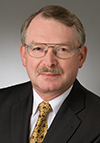 |
| Takaharu Nakamura received the B.S. in Electronic Engineering from Chiba University, Japan, in 1983. He joined Fujitsu Laboratories Ltd. in 1983 and moved to Fujitsu Ltd. in 2003, where he was engaged in the development of mobile radio communication systems. He has been contributing to standardization activities for 3G and 4G wireless systems at ARIB and 3GPP since 1998 and served as the chairman of 3GPP TSG-RAN-WG4 from 2007 to 2011. Since 2012, has been a vice chairman of 3GPP TSG-RAN. In 2013, he was appointed as a sub-leader of "ARIB 2020 and beyond AdHoc" and the leader of "System Architecture & Radio Access Technology working group". He is a member of the Institute of Electronics, Information and Communication Engineers of Japan (IEICE). | 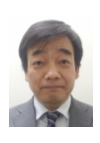 |
|
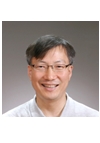
Hyeon Woo Lee is currently associate professor of mobile system engineering dept. of college of international studies at DanKook University of Korea. From March 2009 to Feb. 2013, He served as a National R&D Program Director of KEIT (Korean Evaluation Institute of Industrial Technology) under Ministry of Knowledge Economy of Korea had been work as Director and Head of Global Standard & Research Lab. in Telecom R&D Center of Samsung Electronics Co. in Korea until Feb. 2009. He received BSEE from Seoul National University, 1985 and MBA from Sogang University, 1989, in Korea. He got MS and Ph. D degree at KAIST, Korea in 1994 and 2003 respectively. He Joined Samsung Electronics in 1984, starting from development of Telecommunication Systems in several wireline and wireless communication field. Since 1996, he devoted himself to national and international standardization work such as ETSI, ARIB, TTA, 3GPP , 3GPP2 and ITU. In addition to the ongoing standard work, he paid special attention to 4G/B3G related works in ITU-R TG8/1, WP8F. He served as a vice chairman of 3GPP TSG-RAN WG1 on UMTS radio from 2001-2002 and served as a vice chairman of WWRF WG4 responsible for 4G radio interface in 2004. From 2005 to 2009, he has been vice chairman of 3GPP TSG-RAN in charge of UMTS and LTE radio and network evolution. He was Korean TTA (Telecom. Tech. standard Association) PG302 (WiBro) international coordination Group chair and served as a Korean NGMC (Next Gen. Mobile Comm.) Forum terminal WG chair as well. He is currently chairman of Korean TTA PG701 (IMT-Adv.) and Chairman of CJK (China Japan Korea) IT standard collaboration meeting IMT WG. He is a member of KICS, IEEE and IEICE. |
 |